From late 2006 to February of 2013, I was privileged to be employed as Vice President for Marketing and Communication for the University of Minnesota Foundation. My responsibilities included oversight for the public recognition of organizations and individuals who provide private support to the University. I also served on the All-University Honors Committee that has oversight for many types of University-wide recognition including honorary degrees and the honorary naming of significant University assets, including buildings.
I have recently been reflecting on my experiences in this work because of the controversy surrounding certain building names at the University. It’s made me recall “my worst fear” that involved imagining a future me looking back at the then me, and decisions I had made, with the future me wondering, “what (the xxxx) was she thinking?” My reflections are now magnified through the lens of my a doctorate degree in Organization Development, which gives me even greater insight into my worst fear.
While Regents policies and the recently published Coleman committee report provide adequate guidance on procedures for decisions involving honorific naming, they come up short on guidance for the ethical dimensions of decisions that imply perpetuity, like for example, the honorific naming of buildings. As a result, these decisions are not deliberated with the kind of gravitas associated with say, a new law or a constitutional amendment, yet practically speaking, the process yields a similar outcome – these decisions obligate future generations of University leadership to uphold and sustain an honor into perpetuity. I remember, at the time, struggling with my own ethical questions about the process, beginning with my discomfort with the conceit of bestowing this authority to any group of individuals.
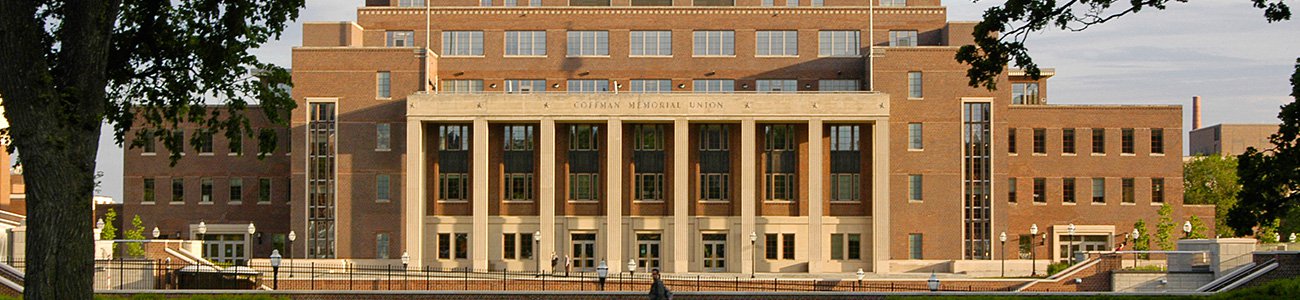
Supreme Court Justice Ruth Bader Ginsberg is known to quote the constitutional scholar Paul Freund, who said that “the Court should never be influenced by the weather of the day but inevitably will be influenced by the climate of the era”. This same logic can be applied to the honorific naming decisions of the buildings in question- Coffman Memorial Union, Middlebrook, Nicholson and Coffey Halls. When these decisions were made, they were influenced by the weather of the day. But they are now being reexamined in the context of the climate of the era, which has changed considerably since these decisions were made. A closer examination may reveal that, historically, almost every honorific naming decision was influenced by the “weather of the day.” But only these four are being asked to hold up in today’s climate of inclusive values and it is this change in climate that has resulted in the four specific individuals becoming the targets of scrutiny, instead of the decision making process itself.
Shifting the focus away from the people being honored and toward an ethical examination of the process of honorific naming would allow for a reexamination of these past decisions without targeting the legacies of those specific individuals and trapping all parties in a terrible set of binary trade-offs. Judge Ginsberg successfully used this argument as a lawyer in her first landmark case; she said she was not asking for the court to change the country because that had already happened. She asked the court to “protect the right of the country to change” by arguing that because of the changes, the precedents of the past no longer applied.
Professor John Wright, an advisor to the task force who spoke at the April Regents meeting is correct in saying that nobody has a permanent lease on honor. There are no legally protected rights associated with honorific recognition. The focus should be on a reexamination of the ethical and moral duties associated with the process by which these honors are extended and sustained, and acknowledging that sometimes these duties can conflict, as we see here with a duty of loyalty to the past conflicting with the duty to prevent harm and the duties of reparation.
The question of what is owed to the decisions of the past can be framed by asking what is the moral duty of today’s leaders to future leaders of the University? How can decisions that were influenced by the weather of the day be re-evaluated based upon the climate of the era? Can there be a process for future generations to be relieved of the perpetual obligations that are shown to cause harm and that conflict with institutional values but without dishonoring the legacy of the past? Such an examination would contribute to the larger conversation about what it means to be an inclusive organization and, in the process, make the University stronger and more united.

 Hello, I'm Lisa Meyer